CoMPASS: Concept Mapped Project-based Activity Scafolding System

"" 2011-2012 School Year Welcome Parents and Guardians
Learn how CoMPASS can help your children to develop
literacy skills in science.

Teachers and students in select classes across the nation are continuing with cutting edge science instruction by using the CoMPASS project’s instructional activities and materials. Collaborating schools and teachers work in partnership with the CoMPASS project learning scientists at the University of Wisconsin- Madison to develop high quality experiences for students to learn important standards-based science along with scientific literacy and computer skills.

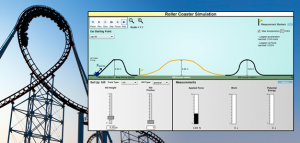
The CoMPASS project integrates three modes of learning science: digitally linked online text, inquiry-based, design challenge activities, and simulation experiments. As an example, the main design challenge in the CoMPASS Fun with Roller Coasters!! Work, Energy, Forces & Motion unit asks students to work like engineers to design a fun, safe, and efficient roller coaster for the Gonzales family, who would like to add a new roller coaster to their amusement park to help to increase park attendance.

Work, forces, motion, and energy are concepts that can be seen or experienced in everyday life. You can help your child to think about how the concepts they are learning in the context of roller coasters can be seen in other everyday situations such as driving or playing baseball.

Students learn the physics behind roller coasters through participating in several explorations related to different sections of the roller coaster. During the explorations, students are encouraged to brainstorm, make predictions, conduct research using the CoMPASS website, experiment, make models, and collect and analyze data. They use the information they learn during these experiences to create their final roller coaster design and write a proposal for the Gonzales family at the end of the unit. Several CoMPASS units have been developed, covering a range of topics in physics, enabling students to learn about key concepts such as work, energy, force, acceleration, and Newton’s Laws of motion.

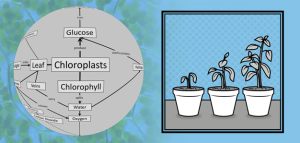
The goal of the CoMPASS materials is to help students to understand relationships between key standards-aligned science concepts and principles. Their understanding of these relationships is fostered through the use of dynamic concept maps embedded within the online text, which students examine and navigate through as they read. The design challenges provide students with a context for their hands-on and computer simulated investigations. This enables them to see the interconnections between the concepts, such as how force and acceleration are related.

Dr. Sadhana Puntambekar, Principle Investigator on CoMPASS for over twelve years, works with other physics experts and learning scientists to design, develop, and study student learning with the CoMPASS approach. She is a professor in the Educational Psychology Department, at the Wisconsin Center for Education Research. Her work in this field is internationally recognized for its success and contribution to science education. Enhancing Literacy in Science through Digital Text, Simulations and Design Challenges-CoMPASS-Physics is funded through the Gates Foundation Next Generation Learning Challenges Grant program.

We invite you, as parents or guardians to join our partnership and participate in supporting your student to learn with CoMPASS. You and your child can access the CoMPASS hypertext from a home or library computer to reinforce what they have learned in class. During the CoMPASS unit, this online software will be your child’s primary text-based resource.

Gates Foundation

CoMPASS: Concept Mapped Project-based Activity Scafolding System